| Check out the Latest Post |
Empty Nesters on a Green Global Trek: Granada, Nicaragua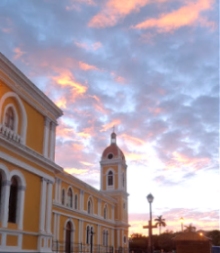 In 2008, we launched on a multi-year “Green Global Trek”. For years we had yearned for the freedom to sculpt a more nomadic lifestyle, once our four teen-age boys would be off to college. We prepared the terrain, gradually, by doing some research about potential launch points for our global trek and decided on Nicaragua as a starting point. In 2008, we launched on a multi-year “Green Global Trek”. For years we had yearned for the freedom to sculpt a more nomadic lifestyle, once our four teen-age boys would be off to college. We prepared the terrain, gradually, by doing some research about potential launch points for our global trek and decided on Nicaragua as a starting point.
Why Nicaragua? Our criteria were three: We wanted to create an environment where our boys would come and visit (i.e. close enough to Chicago, our U.S. home base) and where they could over time develop some Spanish language capability which we deemed critical for their professional and personal development; We wanted an affordable place in the sun, rich with architectural beauty in the city and natural beauty in the surrounding countryside and beaches; And we wanted a country where we felt our skills set could be put to good use in some way – Nicaragua, the second poorest country in the Western Hemisphere certainly had plenty of opportunities for both social and environmental impact.
So in preparation of a future as “empty nesters”, we visited the country several times, bought a small property in the heart of the historic district, designed and built our dream house within 6 months, and started to travel there over a period of 3 years as often as we could get time away from our work and could afford the tickets, while the boys finished high school.
The very next week after our youngest graduated high school, we packed our bags, sold the bulk of our “stuff” accumulated over years, reached a deal with the bank that held our mortgage, bought one way tickets, and were on our way to Granada, Nicaragua, with our two dogs.
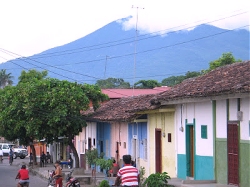 Ben is a strategy consultant and has spent the bulk of his professional life advising corporations in the aerospace industry about diversification and growth strategies. The core skills set he developed professionally would port well to an elaboration of personal strategies to make our move to living in Nicaragua a successful one. I am an artist with a psychology background and the ability to network, which would serve us well in the endeavor to form a new group of friends and relationships in our new home. Ben is a strategy consultant and has spent the bulk of his professional life advising corporations in the aerospace industry about diversification and growth strategies. The core skills set he developed professionally would port well to an elaboration of personal strategies to make our move to living in Nicaragua a successful one. I am an artist with a psychology background and the ability to network, which would serve us well in the endeavor to form a new group of friends and relationships in our new home.
The experience of living abroad is exponentially richer as one engages directly with the community, rather than life on the periphery as detached “expats”. No longer tourists taking in the sights of our beautiful new town, we wanted to become actors, not mere observers.
We did a quick inventory of what assets we could bring to our new community in Granada, at relatively minor cost and relatively quickly. We settled on the idea of leveraging my skills set as a painter.
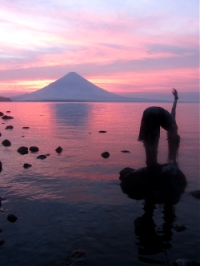 In our first week in country after our move, we therefore marched into a nearby high-school, met the Principal of the school, found out that he did not have an arts program, due to lack of funding and lack of time to organize it. We offered to kick-start an arts program. He was dubious but open minded, thinking we were tourists “playing at impact”, probably never to return. Clearly he didn’t know us. We returned that same week with boxes full of drawing and painting material and a potential Nicaraguan young artist who agreed to partner with us as teacher for a new arts program. The first class was offered within days and by the end of the term 7 students were enthusiastic participants. The Principal, recognizing that we were not “all talk”, asked us to think about how to expand this initial effort into a more robust arts program. I sold a few of my large paintings and used the funds to expand the arts program. Over the next 18 months, the program grew to include 7 courses on painting, drawing, tile making and photography, reaching 150 kids. In our first week in country after our move, we therefore marched into a nearby high-school, met the Principal of the school, found out that he did not have an arts program, due to lack of funding and lack of time to organize it. We offered to kick-start an arts program. He was dubious but open minded, thinking we were tourists “playing at impact”, probably never to return. Clearly he didn’t know us. We returned that same week with boxes full of drawing and painting material and a potential Nicaraguan young artist who agreed to partner with us as teacher for a new arts program. The first class was offered within days and by the end of the term 7 students were enthusiastic participants. The Principal, recognizing that we were not “all talk”, asked us to think about how to expand this initial effort into a more robust arts program. I sold a few of my large paintings and used the funds to expand the arts program. Over the next 18 months, the program grew to include 7 courses on painting, drawing, tile making and photography, reaching 150 kids.
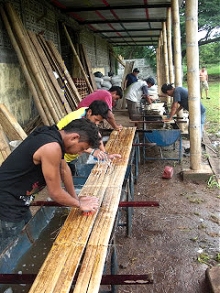 Our neighbors began to “hear” of our activities. Working on behalf of children, in any country, is a sure path to brand oneself as “good guys”, and we achieved that very quickly on our street. Soon, we were invited to participate in the annual preparation of festivities for Christmas and New Year on our street. Our neighbors began to “hear” of our activities. Working on behalf of children, in any country, is a sure path to brand oneself as “good guys”, and we achieved that very quickly on our street. Soon, we were invited to participate in the annual preparation of festivities for Christmas and New Year on our street.
Having achieved our first strategy of morphing from observers to actors, we were ready to elaborate a strategy to deal with our next priority: we would need, over time, to develop a source of income. We were significantly impacted by the 2009 economic crisis, having lost the bulk of our savings in the stock market and with the dramatic drop in real estate value of our home. As a result, we did not have the luxury to “retire”, but rather would need to combine our new Nicaragua-based nomadic lifestyle with an ability to earn income. One primordial criterion, though, was that we wanted to have social and environmental impact. After much investigation of a range of possibilities, we decided to try to develop an activity around bamboo.
Ben’s strategy background helped us leap past the minor reality that we, currently knew nothing about bamboo, other than the fact that it is an environmentally preferable alternative to wood for many products. We focused initially on WHAT we wanted to do, not yet HOW we would do it. Our vision evolved into the notion of creating a social enterprise that would create jobs in bamboo-rich communities, while addressing a market for bamboo products (and generating enough income to pay us a salary to keep the wheels on in our new home).
Over the next 4 years, we transformed this vision into a reality. We became actors in the bamboo value chain and started to develop tentacles into many aspects of Nicaraguan society that we would never have encountered by being “retired observers” on the sidelines. We quickly settled on a detailed plan anchored on the construction of bamboo houses to address a massive housing shortage in Nicaragua.
Our home became central headquarters for an quickly growing population of Nicaraguan associates. Our quaint idea of “having impact” morphed into a full-fledged business start up. Given the low cost of labor, we were able to form an initial core team – hiring young civil engineers, architects and forestry technicians; we started to collect rare bamboo seeds and distributed them for free to farming communities where we felt we could organize mini plantations.
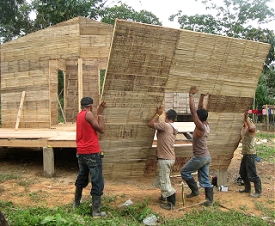 We looked for funding opportunities from International Non Government Organizations. We identified one town, in the far distant corner of Nicaragua’s Northern territories, an area rich with bamboo, where the mayor had a problem we could address. His territory had been greatly damaged by a hurricane, funding was available from European NGOs for reconstruction of destroyed homes, but available solutions were not acceptable. Standard concrete block affordable housing, built typically in the urban areas of western Nicaragua, were inappropriate for this region. Hard to access by sand/mud roads, the cost of transporting cement blocks 18 hours by road made the low cost homes no longer affordable. The alternative was to build wooden homes, but the Mayagna and Miskito indigenous communities, who lived in and of the forests were opposed to the scheme. They understood that destruction of their forests could not possibly be the best outcome for them. We came in, with our Nicaraguan civil engineers, architects and budding bamboo forestry experts and pitched the obvious – we would build bamboo houses with local bamboo, hiring and training local Mayagna indigenous community members to build bamboo houses. We looked for funding opportunities from International Non Government Organizations. We identified one town, in the far distant corner of Nicaragua’s Northern territories, an area rich with bamboo, where the mayor had a problem we could address. His territory had been greatly damaged by a hurricane, funding was available from European NGOs for reconstruction of destroyed homes, but available solutions were not acceptable. Standard concrete block affordable housing, built typically in the urban areas of western Nicaragua, were inappropriate for this region. Hard to access by sand/mud roads, the cost of transporting cement blocks 18 hours by road made the low cost homes no longer affordable. The alternative was to build wooden homes, but the Mayagna and Miskito indigenous communities, who lived in and of the forests were opposed to the scheme. They understood that destruction of their forests could not possibly be the best outcome for them. We came in, with our Nicaraguan civil engineers, architects and budding bamboo forestry experts and pitched the obvious – we would build bamboo houses with local bamboo, hiring and training local Mayagna indigenous community members to build bamboo houses.
After less than one year of working all the angles of our new bamboo ecosystem, we were awarded a contract to build 80 homes, provided we built a factory in the Mayagna community. With this caveat, we pursued and got funding from European philanthropy organizations. Within a few months, we built a factory – the largest bamboo processing facility in Central America. The organization we built started building prefabricated bamboo housing sold to NGOs and global institutions to provide eco-housing to victims of natural disasters.
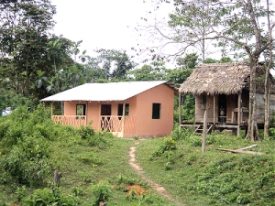 We achieved what we set out to do – namely to become social impact entrepreneurs and we moved from the periphery of “expat observers.” As a result of this full engagement in Nicaraguan society, we interacted with a population we would never have encountered had we not committed to an impact-agenda. We met young architects and engineers, Mayagna indigenous community leaders, poor farmers, established businessmen, NGOs, Government officials, journalists and European philanthropists who joined us in our bamboo crusade. We achieved what we set out to do – namely to become social impact entrepreneurs and we moved from the periphery of “expat observers.” As a result of this full engagement in Nicaraguan society, we interacted with a population we would never have encountered had we not committed to an impact-agenda. We met young architects and engineers, Mayagna indigenous community leaders, poor farmers, established businessmen, NGOs, Government officials, journalists and European philanthropists who joined us in our bamboo crusade.
Part of our strategy was also to use Nicaragua as a base for travel. Through bamboo, we traveled to Colombia, Ecuador, Panama, the Dominican Republic, Cuba and Haiti. Again, we were not just “tourists”, but combined our desire to travel through the prism of our bamboo adventure. From Colombia we learned about high-end bamboo construction; From Ecuador we learned about bamboo housing for the very poor. The biggest challenge to our new life came from Haiti. In 2012’s 35-second earthquake, 200,000 Haitians died and over 1,000,000 become homeless. We were moved to flex our newly developed bamboo muscle and try to contribute to Haiti’s reconstruction. Not one to be deterred by the chaos that reigned in Port au Prince, Ben dove into the aid ecosystem, brought rare Nicaraguan bamboo seeds to launch small bamboo plantations with the participation of Haitian farmers, hired and trained a team of Haitian builders, and built two demonstration homes. Ben spent the better part of two years with one foot in Nicaragua and the other foot in Haiti to try to break into the reconstruction initiatives that were mired in NGO bureaucracy.
Sadly, the vision of a nomadic lifestyle as empty nesters started to look increasingly like the stress-filled jobs we had left behind in Chicago. We reached a tipping point when the business became just that – a business, with all its trappings of responsibility and time-consuming management obligations.
At the same time, my globe trotting fantasies started to rev up. The desire to travel far and wide cropped up increasingly frequently in our conversations. I started to dangle the prospect of carefree travel in Southeast Asia – the food, the architecture, the new cultures, and the adventure of new discovery… It became time to reboot and return to the initial vision for our Green Global Trek. We turned the business over to our Nicaraguan associates, so that they could continue the bamboo dream.
A full-on engagement through impactful projects, like the one we committed to in Nicaragua, is not for everyone. It does not yield a traditional retirement “chill” lifestyle. It does however yield a rich and rewarding formula for life as Empty Nesters.
We have now developed an “Empty Nesters consultancy” activity, taking advantage of Ben’s strategic planning skills and my psychology background, which continues to provide some insights to like-minded pseudo retirees eager to combine the discovery of new lands with the desire for impact.
After 6 wonderful, tumultuous, exciting and impactful years in Nicaragua, we have now embarked on the second leg of our Green Global Trek, in Asia.
Click for additional information about Nicaragua.
|
| or this Random Post selection from our blog |
The La Palma MegatsunamiI’m off to the Canarian island of La Palma, which is also known as ‘The Beautiful Island’, again next week. Although I live on the island of Gran Canaria, all of the seven main islands that make up this fascinating archipelago are very different to each other. I try to visit each island from time to time, but I am particularly fond of La Palma, which is the fifth largest of the seven main islands, covering an area of around 706 square kilometers, with a population of around 90,000 people, most of whom live in the island’s capital city of Santa Cruz de la Palma.
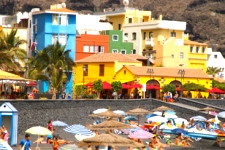 It is a lush, green and wooded island, with beautiful forests, and is a walker’s paradise. Clear skies make this island a stargazer’s paradise too, which is one of the reasons that a number of international telescopes operate on the island to monitor the night skies. The island offers the most diverse plant life of all the Canary Islands, together with species such as the La Palma Giant Lizard, La Palma Chaffinch, Quail and Goldcrest, all of which are unique to the island. Since 1983, the island has been one of the UNESCO World Network of Biosphere Reserves. Should tourists wish to escape sun seekers heading for the beaches on the larger islands, this is the place to come. It is a lush, green and wooded island, with beautiful forests, and is a walker’s paradise. Clear skies make this island a stargazer’s paradise too, which is one of the reasons that a number of international telescopes operate on the island to monitor the night skies. The island offers the most diverse plant life of all the Canary Islands, together with species such as the La Palma Giant Lizard, La Palma Chaffinch, Quail and Goldcrest, all of which are unique to the island. Since 1983, the island has been one of the UNESCO World Network of Biosphere Reserves. Should tourists wish to escape sun seekers heading for the beaches on the larger islands, this is the place to come.
As with all the Canary Islands, La Palma is volcanic in origin, with the volcano rising to around 7km (4 miles) above the floor of the Atlantic Ocean. The island was formed around 4 million years ago, and is one of the most volcanically active of all the Canary Islands, and this is where the problems begin…
It has been suggested by some that one day, far into the future, La Palma will be the cause of one of the largest tsunamis that the world has ever known. Indeed, to clarify its awesome status, it has been referred to as a megatsunami in waiting. This is based on the hypothesis that rising pressure caused part of Cumbre Vieja, which is a volcanic ridge in the south of the island, to slip towards the Atlantic Ocean and that during a future volcanic eruption, part of it would slip into the Atlantic. Currently, the Cumbre Vieja is dormant, with the last eruption taking place in 1971.
Should the worst occur, it has been speculated that the resulting megatsunami would create a giant wave of around 49 meters (160ft) causing devastation along the Atlantic coastlines of North America, wiping out New York, the Caribbean and the north coast of South America, as well as affecting an area of around 25 km (16 miles) inland from the coast. From the moment that part of La Palma falls into the Atlantic there will be a period of about 6 to 8 hours before it hits the American coastline. In any case, should the worst happen, it is not supposed to happen for another ten thousand years or so, which should allow plenty of time to move home.
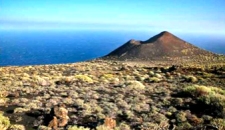 I should also make it clear that many eminent scientists and geologists have refuted this theory as pure hype, and claim that La Palma is stable and will not fall into the sea. It is claimed that this is a disaster theory invented by researchers intent on gaining funding for their own research projects. Others claim that this is a convenient story exaggerated by US insurance companies, intent on raising insurance premiums, as well as being seen as a business opportunity by the hazard industry. Even if the worst should happen, there would hardly be more than a splash felt at the other side of the Atlantic, and so New Yorkers should continue to feel safe. I should also make it clear that many eminent scientists and geologists have refuted this theory as pure hype, and claim that La Palma is stable and will not fall into the sea. It is claimed that this is a disaster theory invented by researchers intent on gaining funding for their own research projects. Others claim that this is a convenient story exaggerated by US insurance companies, intent on raising insurance premiums, as well as being seen as a business opportunity by the hazard industry. Even if the worst should happen, there would hardly be more than a splash felt at the other side of the Atlantic, and so New Yorkers should continue to feel safe.
There’s nothing like a good disaster story is there? After all, we all flock to the movies to see them. However, when it is closer to real life, it is not quite so entertaining. This story has already created many victims. Questions were asked in the British Parliament following a BBC television program that first revealed the danger, many Americans considered selling up and moving to higher ground, tourists cancelled holidays to La Palma, many expats sold their homes on the island and many charter flights to the island ceased.
As for me, I cannot wait to visit and explore the island once again. However, I will make sure that I do not jump up and down too energetically when I get to Cumbre Vieja – just in case!
|
| or this Random Page selection from our site |
Remembering Who They WereFor many suffering from painful or debilitating disease, death is the only real relief. For many caregivers, it is the same. Often, worn down by years of attending to the needs of a loved one; years of watching the mental decline from Alzheimer’s disease or other type of dementia; years of watching the frustration and suffering of a once articulate parent struck mute by a stroke, the caregiver also feels relief when the suffering person dies. That doesn’t mean there isn’t grief. But it’s often mixed with relief.
But then what? That is what my good friend asked me after her mother died. Her mother had suffered from Alzheimer’s for 10 years. After she died, we discussed what we do after we grieve. How do we remember the person who was? How do we travel back in time, before the dementia? Before the stroke? How do we rescue those precious moments in time, buried under layers of sickness? The sometimes abusive behavior toward the caregiver, by a once loving person? The sheer exhaustion from years of care-giving?
My dad had surgery to relieve pressure built up behind scar tissue in his brain. Dad, as we knew him, went into surgery. Another man came out. He spent 10 years in psychic hell, a semi-stranger in my dad’s body. Mom’s decline was a slow mental slide. She went into a nursing facility because of falls and severe arthritis, but dementia eventually nestled in her brain.
Like my friend who watched her mother decline into a childlike state, I was left wondering, who do I remember? How can I find those loving childhood memories and bring them out from under all of those years of pain?
It takes willingness. It takes focus. And it takes time. But I chose to begin the effort and I choose to continue making the effort. They deserve no less. My parents didn’t ask to live their last years as they did. Nor did they choose how long the decline and dying process would take. I owe them the chance to be remembered as the smart, loving, funny people they were, before all of that.
God knows I couldn’t forget those years of decline. And I don’t want to. It’s part of their lives and part of mine. But that is not what I want to remember first, when I think of them. I want to remember who they once were.
I am very slowly getting so that, when I see that I have a waiting phone message, I don’t panic, expecting yet another trip to the emergency room. I am slowly putting those last years into perspective. I’m remembering the parents who raised me. The grandparents who played silly games with my boys. I’m remembering, with some effort, the whole of each person, not just fragmented pieces that remained at the end.
My friend and I agreed on this. We agreed that it was very hard, but well worth the effort, for our loved ones, and for ourselves. It does get easier, as time passes. I choose to remember the whole person, to honor the complete life rather than dwell on a slow, often demeaning death. I choose to remember them as they were.
|